“The distribution of wealth is similar in all countries and at all times: a small portion of the population owns the largest portion of the wealth.” — Vilfredo Pareto, Italian economist and sociologist
If you run a business that sells products, you know that not all items are equally important. Some products sell quickly and generate most of your revenue, while others take longer to sell. ABC analysis helps you organize your inventory in a simple and effective way.
What Is ABC Analysis?
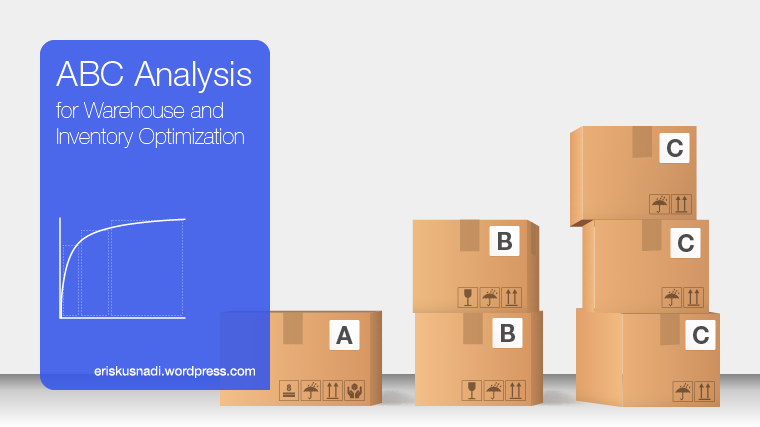
ABC analysis is an inventory classification method that helps control a small number of items that represent a high investment value. It is widely used in inventory management, supply chain optimization, and warehouse control systems.
It’s rooted in the Pareto Principle (Ley de Pareto), named after the Italian economist Vilfredo Pareto (1848–1923), who observed that around 80% of the wealth was owned by 20% of the people. This concept—often called the 80/20 rule—applies in business too: around 20% of your products usually generate 80% of your revenue.
In the 1940s, Ford Dickie from General Electric adapted Pareto Principle to inventory control, creating what we now call the ABC classification system. This system ranks items from highest to lowest value, then groups them into priority classes—typically labeled A, B, and C. That’s why it’s called “ABC Analysis.” Generally, Class A includes a small number of items with very high value.
The Classes in ABC Analysis
In ABC inventory analysis, items are typically classified into three classes—A, B, and C—based on their quantity and value (Sutarman, 2003, pp. 144–145):
- Class A: These are your VIP items. They make up about 15–20% of total items but represent 75–80% of value. You want to keep a close eye on these items—they drive your business.
- Class B: These are your mid-tier products. They account for 20–25% of items and contribute 10–15% of value. They’re important but don’t require as much attention as Class A.
- Class C: These are your low-value items. They represent 60–65% of items but only about 5–10% of value. You don’t need to manage them as tightly, which helps save time and resources.
This classification method helps businesses optimize inventory management by focusing resources on the most valuable items. The distribution of these classes typically forms a curve, as illustrated in Figure 1 below, highlighting the Pareto Principle often applied in supply chain and warehouse management.

Gambar 1. Kurva Analisis ABC (Sumber: Kusnadi, 2009, p. 9)
Here’s the Easy Way to Do It
Ready to implement ABC analysis in your business? Here’s how to do ABC analysis in 8 easy steps:
- List all inventory items and their quantities.
- Find the unit cost of each item.
- Calculate the total value (quantity × unit cost).
- Sort items from highest to lowest total value.
- Figure out the cumulative % of quantity.
- Figure out the cumulative % of value.
- Group your items into A, B, or C based on their value.
- Make a chart (Pareto or bar chart) to easily identify top-priority products.
This approach will helpful if you are dealing with tons of inventory and need a better way to stay organized.
Final Thoughts
ABC analysis is a practical and proven method for helping businesses prioritize what matters most. By identifying and focusing on high-value items, you can improve inventory efficiency, reduce costs, and make smarter decisions. In the end, success often comes down to focusing on the vital few, not the trivial many.
Rujukan:
Kusnadi, E. (2009). Analisis produktivitas terhadap penyeimbangan lintasan. Unpublished undergraduate thesis, Program Studi Teknik Industri, Universitas Mercu Buana, Jakarta.
Sutarman. (2003). Perencanaan persediaan bahan baku dengan model backorder. Infomatek, 5(3), 141–152.
